Understanding Emotional Regulation: How to Map Your Triggers and Strengthen Self-Awareness
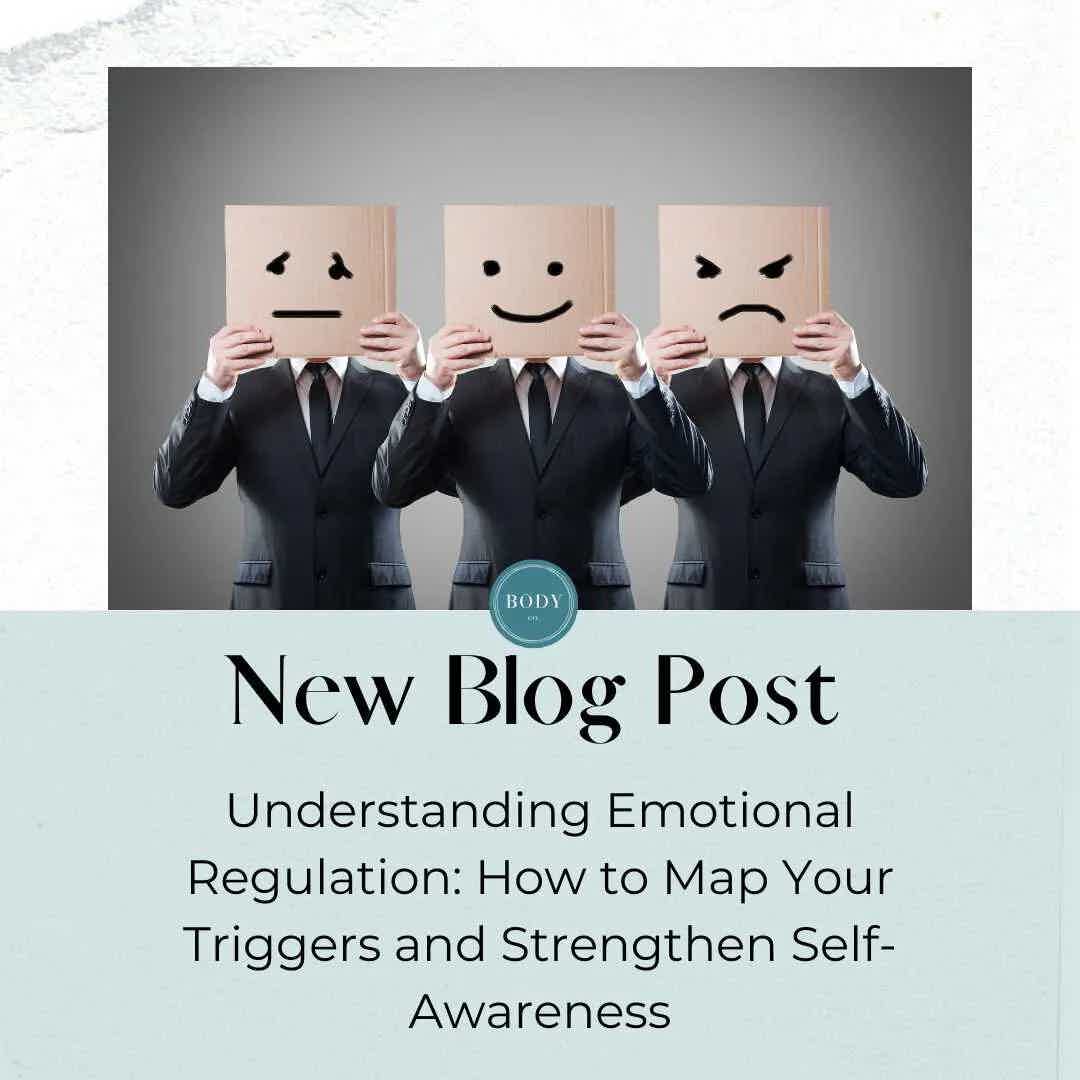
What Emotional Regulation Really Means
As therapists, we often talk about the importance of emotional regulation—the ability to notice, name, and navigate our emotions in a healthy way. Yet many people misunderstand this concept. Emotional regulation is not about suppressing, controlling, or over-intellectualizing your feelings. Instead, it’s about developing the skill to recognize an emotion, name it, and respond—not react—to it.
When we regulate our emotions effectively, we create space between stimulus and response. This space gives us agency, supports nervous system balance, and strengthens our relationships.
Why Mapping Emotional Triggers Matters
Once we can identify our emotions, the next step is understanding what triggers them. Emotional triggers are the cues—often rooted in past experiences—that spark intense emotional reactions in the present.
Exploring these triggers helps us see the patterns between our body, mind, and emotional history. This process is often best supported in therapy, where we can safely examine how our early experiences and relationships shaped our emotional memory and reactivity.
For more insight, the Gottman Institute, provides an excellent guide to common emotional triggers and how they influence communication and conflict.
The State-Shifting Practice: A Framework for Mapping Emotional Triggers
The following four-step framework can help you begin to map your emotional triggers and practice self-regulation in real time.
Step 1: Name It
Start by noticing the early signs of emotional activation.
This might feel like tightness in your chest, heat rising in your body, or tension in your shoulders. Then label the emotion that comes with the sensation—for example:
“I feel angry.”
“I feel hurt.”
“I feel anxious.”
Naming an emotion helps bring it into conscious awareness, allowing your prefrontal cortex (the thinking brain) to re-engage. Remember: you are bigger than your emotions.
Step 2: Take Space When Needed
When we’re triggered, our nervous system automatically shifts into one of four stress responses—fight, flight, freeze, or fawn.
Taking space (even for a single deep breath) interrupts that automatic reaction and gives your system a chance to reset.
You might:
- Step out of the room for a few minutes.
- Take several slow, grounding breaths.
- Splash cold water on your face.
- Simply pause before speaking.
These micro-moments of pause are where regulation begins.
Step 3: Shift Your State
Once you’ve paused, you can intentionally shift your physiological and emotional state.
This is the action step that moves you from reaction to reflection.
- Try incorporating practices such as:
- Grounding or mindfulness exercises
- Deep breathing or box breathing
- Gentle stretching or walking outside
- Journaling about what you’re feeling
- Using guided meditation or calming music
The goal isn’t to eliminate your feelings—it’s to reconnect with yourself so you can think clearly and respond from a place of intention.
Self-regulation is like a muscle: it strengthens through repetition and self-compassion.
Step 4: Respond vs. React
This final step is about practice and consistency. Each time you notice a trigger and pause before reacting, you reinforce your capacity to respond thoughtfully.
- Responding rather than reacting allows you to:
- Communicate more clearly
- Set healthier boundaries
- Reduce conflict in relationships
Align your actions with your values
With ongoing practice, this intentional approach becomes second nature—fostering emotional resilience and mindful conflict resolution.
Bringing It All Together
Emotional regulation isn’t about being unbothered or detached. It’s about recognizing how your experiences shaped your emotional responses and using that awareness to shift your state with care.
Over time, these small moments of awareness—pausing, reflecting, and choosing differently—lead to powerful change. You’ll notice:
- Less reactivity and more reflection
- More patience and empathy in relationships
- Greater inner stability and confidence
When you learn to regulate your emotions, you learn to lead your nervous system rather than be led by it.
When to Seek Support
If you find yourself frequently triggered or struggling to return to a calm state, working with a therapist can be profoundly supportive. Emotional regulation is a learned skill, and therapy provides the structure, tools, and reflection space to strengthen it.
At Body Co Health & Wellness in Toronto’s Junction neighbourhood, our therapists integrate nervous system education, mindfulness, and evidence-based strategies to help you better understand and regulate your emotions.
Whether you’re navigating relationship stress, anxiety, or burnout, we can help you build the awareness and resilience to move through life’s challenges with greater ease and clarity.
🧠 Related Reading from Body Co Toronto
Mindfulness and the Art of Turning Off the Fire Alarm: A Guide to Managing Stress
Mindfulness for Everyday Life: Simple Practices to Regulate Your Emotions
Lift Your Mood: The Science Behind Exercise and Mental Health

Paula Fernandez, RSW
Paula is a warm and approachable Registered Social Worker and Psychotherapist who treats her clients like human beings and not patients. Originally from Mexico, Paula takes a very integrated approach and believes our bodies hold the wisdom to help us heal. Paula is enthusiastic about therapy and personal growth, and strongly advocates for her clients to live the life that they want to live.
Paula obtained a Social Service Worker diploma from Humber College and a Bachelor of Social Work (honours) from York University. Paula started her career in Social Work in 2003, and participated in organizational work supporting women against violence, refugees, and members from marginalized populations, focusing on immigration settlement and outreach.
This meaningful work led her to seek other outlets to support and connect with people from a holistic place. She graduated from a five-year Psychotherapy program at the Gestalt Institute of Toronto while managing Integrative Health Clinics focused on functional medicine, chronic pain, women’s health, and hormones. Paula's unique approach to therapy integrates her Social Work background, ten years experience in the health and wellness industry and her mindfulness training. Paula is passionate about empowering her clients and works with individuals suffering from low self-esteem and body image, life transitions, depression, and anxiety.
She works with adults to create a safe space to explore this innovative, client-centered approach to therapy. In that space, she collaborates with the client to establish boundaries, build rapport, identify blocks, unfinished business, and new opportunities for growth.