Is Tech Weakening Your Muscles? The Impact of Upper and Lower Cross Syndromes
What is Upper Cross Syndrome and Lower Cross Syndrome?
One condition I see often in my practice is Upper Cross Syndrome (UCS). What is that you ask?
Well in our technology focused world where we are often hunched over a computer screen or staring down at our phones that is the kind of posture that is typical of Upper Cross Syndrome.
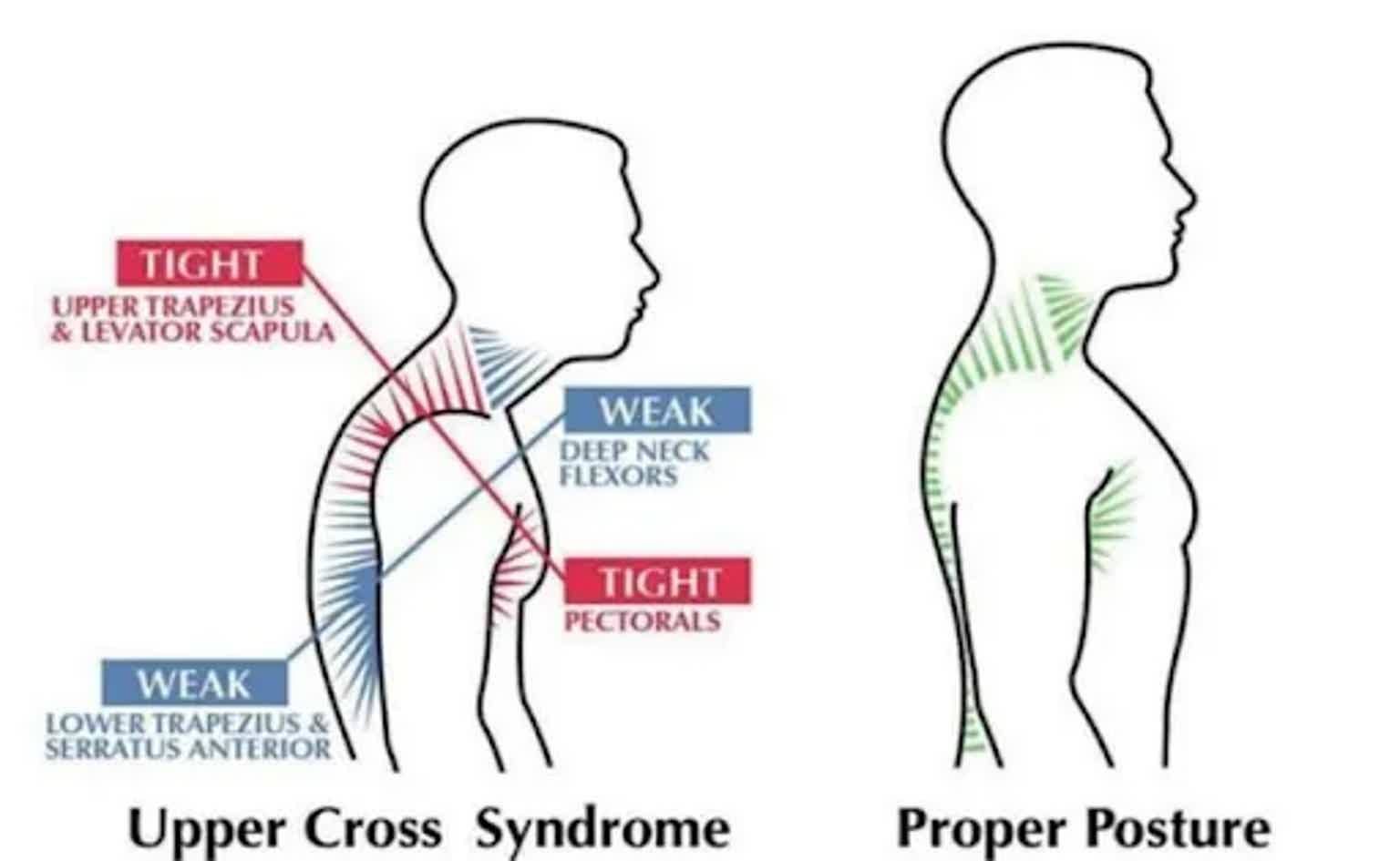
In Upper Cross Syndrome, we have tight muscles opposed by weak and or inhibited muscles. As in the diagram above, you can see the cross of weak vs tight muscles. Typically we see a head forward posture, increased thoracic rounding of the upper back and internally rotated shoulders.
Weak muscles:
- Lower and middle trapezius.
- Serratus anterior, Infraspinatus
- Deep neck flexors.
These muscles play a key role in maintaining the neck's posture.
Tight muscles:
- Upper trapezius
- Pectoralis major
- Levator scapulae,
- Suboccipitals
Treatment of Upper Cross Syndrome involves strengthening of the weak muscles and stretching or soft tissue manipulation of the tight muscles. Targeted exercises can be prescribed to improve posture and improve muscle imbalances.
Moving onto the lower body is Lower Cross Syndrome (LCS). Similar to UCS, we also have weak inhibited muscles crossed with tight muscles. Typically this type of posture can be a result of prolonged sitting and weakness of the abdominals and gluteal muscles. With LCS, there tends to be anterior pelvic tilt and increased lumbar lordosis (aka increased curvature of the low back).
In this case you can see the tight muscles of the back and iliopsoas crossed with the weak abdominal muscles and gluteus maximus muscles. The hamstrings may also compensate for an anterior pelvic tilt and inhibited glutes.

Weak Muscles:
- Abdominal muscles ( rectus abdominis, obliques internus abdominis, obliques externus abdominis and transversus abdominis)
- Gluteal muscles: gluteus maximus, gluteus medius and gluteus minimus
Tight Muscles:
- Back muscles (erector spinae, multifidus, quadratus lumborum and latissimus dorsi
- Hip flexors including iliopsoas and tensor fascia latae.
As in UCS, treatment of LCS involves stretching or soft tissue manipulation of the tight muscles and strengthening of the weak muscles. The muscular imbalances in these conditions can lead to discomfort in the neck, shoulders, and lower back.
Our team at Body Co can help treat these conditions and help get you back to better functioning.

Meet April
With nearly two decades of professional experience, April Boultbee has established herself as a leading massage therapist specializing in sports injury rehabilitation and performance recovery. A 2003 graduate of the prestigious Sutherland-Chan School of Massage Therapy, April combines clinical expertise with personal athletic experience to deliver exceptional therapeutic results.
What truly distinguishes April's practice is her extensive background as an international competitive athlete. As an elite ultramarathoner with over 25 years of racing experience, she brings unique insights to treating athletic bodies.
This firsthand experience with high-performance athletics informs her therapeutic approach, allowing her to better understand the specific needs of active individuals.
Specialized Massage Therapy Services
April offers a comprehensive range of evidence-based massage therapy treatments:
- Sports Injury Rehabilitation - Targeted therapy for runners, cyclists, and athletes of all levels
- Deep Tissue Massage - Focused treatment for chronic tension and injury recovery
- Postural Dysfunction Correction - Specialized techniques to address alignment issues
- Swedish Massage - Classic relaxation and circulation-enhancing techniques
- Customized Treatment Plans - Personalized approaches based on individual assessment
April is currently accepting appointments for new and existing clients on Mondays, Tuesdays and Fridays at Body Co.