Navigating the Unknown: Mental Health Strategies for Uncertain Times
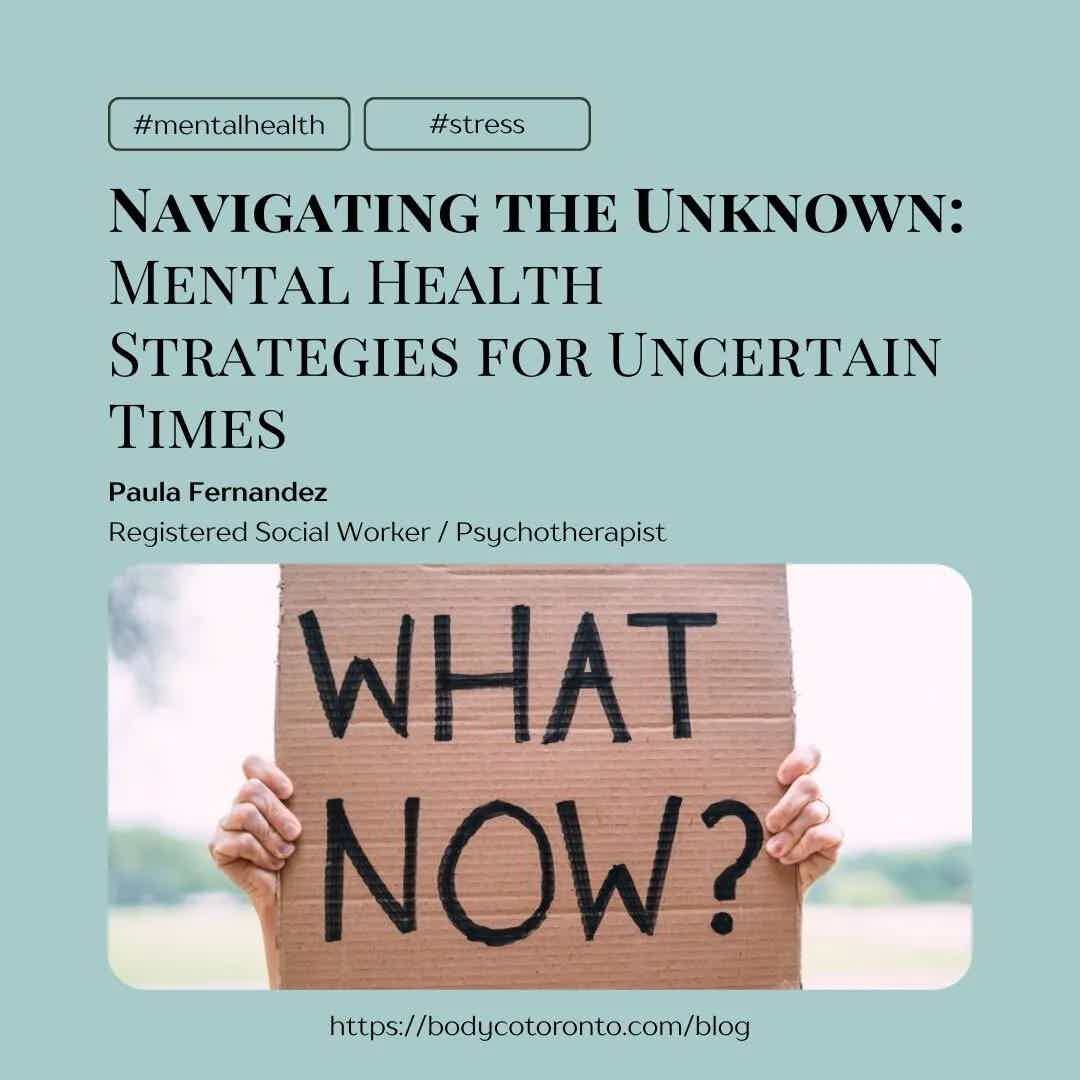
As a therapist, I often notice that clients wonder what is appropriate to share in therapy. If
they’re not experiencing a major conflict, trauma, or personal crisis, they may not seek
support. However, it is important to recognize that feeling uncertain about the state of the
world is a shared human experience—and it’s just as valid a reason to talk about it in
therapy. Constant changes around us such as economic shifts, global conflict and collective
uncertainty can impede our ability to function and meet the demands of the day-to-day.
Here are 7 mental health strategies to combat uncertainty:
________________________________________________________________________________________________________
Stay Anchored in the Present
1. Practice mindfulness by focusing on the here and now. Tune into small
details—your breath, the feel of your feet on the ground, or the sound of your
surroundings. These anchors can gently pull you out of anxious thoughts about the
future.
2. Focus on What You Can Control
Establish a morning routine that feels grounding. Whether it's movement,
journaling, or reading something uplifting, a consistent ritual can help restore a
sense of agency and set the tone of your day.
3. Limit Information Overload
We’ve become accustomed to a constant stream of news and content. Take a
mindful approach: ask yourself whether you’re seeking to be informed or
influenced. Notice when your media intake starts to affect your emotional
state—and take a break or be selective of what news and media outlets you
consume.
4. Stay Connected
Do not forget to reach out to friends, family, or community. You’re likely not alone in
what you’re feeling. Isolation tends to amplify feelings of uncertainty while
connection can help shift your perspective.
5. Practice Self-Compassion
Give yourself grace. It’s okay to feel fear or overwhelm—even if it doesn’t seem
“logical” in the moment. Acknowledge the weight of being human right now and
gently bring your attention back to what matters most in the moment. Stick to the
simple things.
6. Reset Your Nervous System
Did you know a double inhale followed by a long sigh helps regulate your nervous
system? Try it now: breathe in fully, take a second short inhale, then sigh out slowly.
This sends a signal to your body that it’s safe and settles your nervous system.
7. Reach Out to a Mental Health Professional
If your symptoms are persistent and interfering with daily life, it may be time to
connect with a therapist. Therapy is a supportive space to explore what’s coming up
and build tools to manage anxiety and fear.
Although building distress tolerance is important, persistent negative emotions that do not
pass naturally begin to alter our internal state and take a toll on our mental health. It is
worth trying some of these strategies to manage uncertainty and anxiety about the future.
If you are struggling with your mental health, please reach out to your health provider for support.
If you are in distress and a resident of Ontario, the following supports are available:
- 9-8-8 Suicide Crisis Helpline: Call or text 9-8-8
- Toronto Distress Centres: 416 408-4357 or 408-HELP
- Gerstein Centre: 416 929-5200
- Spectra Helpline: 416 920-0497 or 905 459-7777 for Brampton and Mississauga residents
- TTY: 905 278-4890; Languages: English, Punjabi, Hindi, Urdu, Spanish, Portuguese
- Assaulted Women's Helpline: 416 863-0511; Toll-free: 1 866 863-0511
- Kids Help Phone: 1 800 668-6868; Languages: English and French
- Community Crisis Line Scarborough and Rouge Hospital: 416 495-2891 for 24/7 telephone crisis support.
- Service borders: south to the lake, north to Steeles Avenue, east to Port Union Road, and west to Victoria Park
- Durham Crisis and Mental Health Line: 905 666-0483
- Distress Centre Halton: For Residents of the Halton Region (Burlington, Halton Hills, Milton, and Oakville). Oakville: 905-849-4541; Burlington: 905-681-1488; Milton/Halton Hills: 905-877-1211
For emergency situations, please call 911.

Meet Paula
As a Registered Social Worker and certified Gestalt Psychotherapist, Paula offers evidence-based therapy that addresses both psychological and physical dimensions of healing. Her comprehensive approach combines traditional psychotherapy with powerful somatic techniques to release trauma stored within the body.
Paula maintains active registration with the Ontario College of Social Workers and Social Service Workers and completed the prestigious 5-year Psychotherapy training program at the Gestalt Institute of Toronto.
What truly sets Paula apart is her personal journey through endometriosis and chronic pain management. This firsthand experience informs her therapeutic practice, offering clients not just professional expertise but genuine empathy and practical insights for navigating similar challenges.
Paula provides transformative therapy for individuals experiencing:
- Anxiety and panic disorders
- Trauma and PTSD symptoms
- Depression and mood difficulties
- Chronic pain conditions
- Low self-esteem and confidence issues
- Relationship challenges
- Major life transitions
Paula's sessions are characterized by authenticity, practical guidance, and compassionate feedback. Paula provides concrete tools and resources while creating a safe space for exploration and growth.
Her decade of experience in health and wellness ensures you receive knowledgeable support from someone who understands both the clinical aspects and lived reality of emotional and physical healing.