5 Advantages to Nasal Breathing
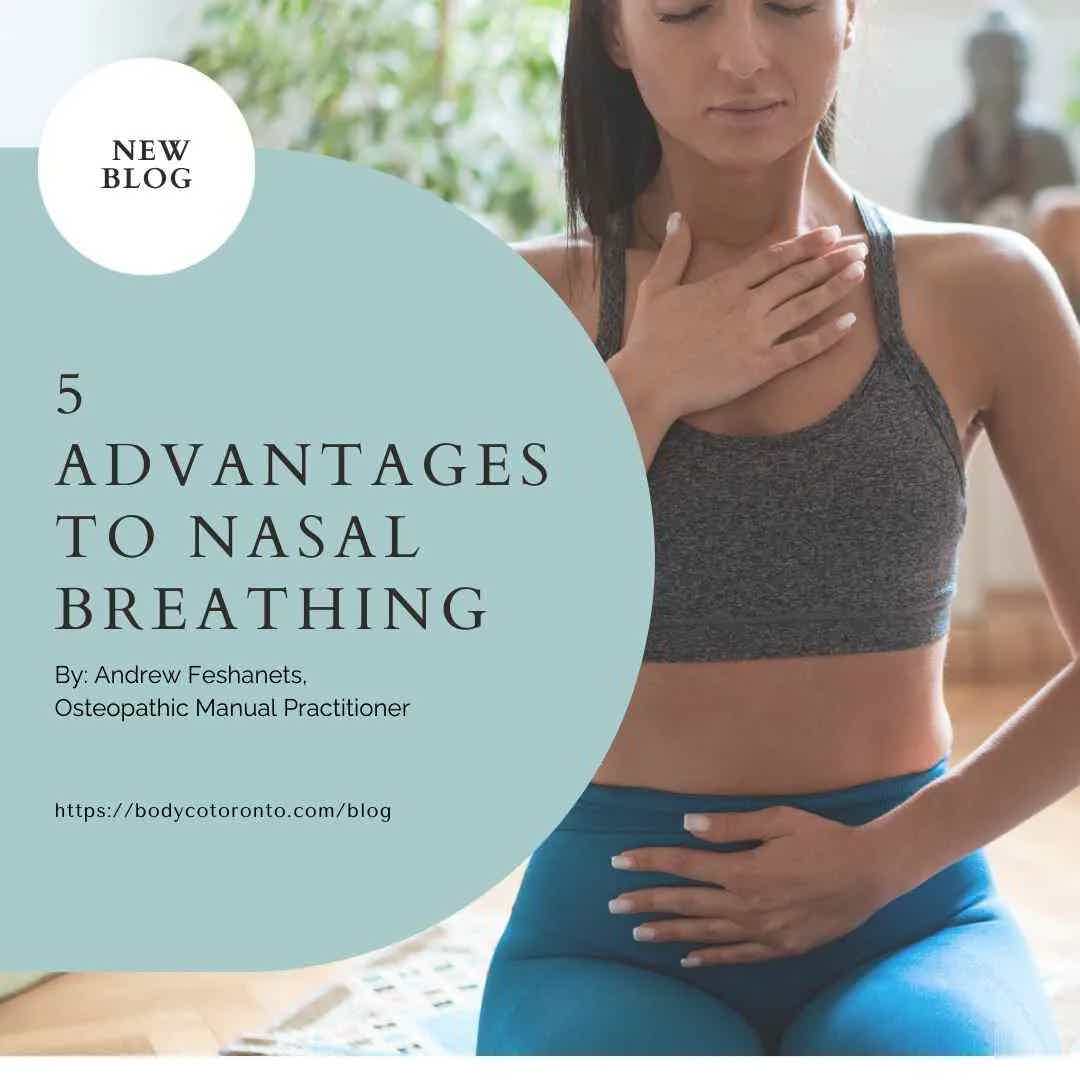
One of the most fundamental yet often overlooked aspects of our health is the way we breathe.
While breathing is an automatic function, the route it takes – through the nose or the mouth –
can significantly influence our physical and mental health. Through my own research on cranial
osteopathic treatment and its impact on nasal function, I saw firsthand how our body is
optimized for nasal breathing and the advantages it can provide us and our overall well-being.
In this post, we’ll explore the advantages and why making a simple breathing change could be a
breath of fresh air for your health.
1. Improved Filtration and Humidification
The nose serves as a sophisticated natural filter for inhaled air. The nasal passages are lined
with tiny hairs and a mucous membrane that trap dust, allergens, and other airborne particles,
preventing them from entering the lungs. Additionally, the air we inhale through the nose is
warmed and humidified before it reaches the lungs. This process is crucial for maintaining
respiratory health, especially in colder climates where dry air can irritate the lungs. Mouth
breathing bypasses these natural filtration and humidification processes, increasing the risk of
respiratory infections and discomfort.
2. Better Oxygenation of the Body
Nasal breathing helps regulate the balance of oxygen and carbon dioxide (CO2) in the blood.
One significant component of nasal breathing is the production of nitric oxide, a gas that plays a
vital role in our body's ability to transport and utilize oxygen. Nitric oxide enhances the lungs'
capacity to absorb oxygen and improves blood flow. This can lead to better oxygenation of
tissues and organs and improved energy levels. Conversely, mouth breathing can lead to over-
breathing and depletion of CO2, which can reduce oxygen uptake and lead to symptoms such as
dizziness and fatigue.
3. Enhanced Dental and Oral Health
Mouth breathing can have adverse effects on dental and oral health. It can lead to dry mouth,
increasing the risk of tooth decay, gum disease, and bad breath since saliva, which helps clean
the mouth and neutralize acids produced by bacteria, is reduced. Chronic mouth breathing can
also affect dental structure, impacting craniofacial development, particularly in children. This
can lead to orthodontic issues such as malocclusion, altered facial structure, and improper jaw
alignment. Nasal breathing helps maintain a healthy oral environment and supports proper
dental development.
4. Promotes Calmness and Reduces Stress
Breathing through the nose can significantly impact our nervous system, promoting a state of
calm and relaxation. Nasal breathing is associated with the activation of the parasympathetic
nervous system, which helps slow the heart rate and reduce blood pressure, signaling the body
to relax and digest. This contrasts with mouth breathing, which can trigger the sympathetic
nervous system, responsible for the fight or flight response, leading to increased stress and
anxiety levels.
5. Improved Sleep Quality
Nasal breathing plays a crucial role in maintaining optimal sleep quality. Nasal breathing
maintains an open airway and supports continuous, efficient respiration during sleep. This can
significantly reduce the occurrence of snoring and obstructive sleep apnea, conditions often
exacerbated by mouth breathing. The release of nitric oxide during nasal breathing also
contributes to better sleep quality by maintaining airway patency and enhancing oxygenation,
leading to a more restful and restorative sleep.
Conclusion
The way we breathe significantly impacts our overall health. By embracing nasal breathing, we
can enhance our body's natural functions, from improved respiratory health and oxygenation to
better dental health and stress management. Small changes can lead to significant health
improvements. Consider building a greater awareness of your own breath and incorporating
nasal breathing exercises into your daily routine. Your body – and mind – will thank you.

Meet Andrew (he/him)
Andrew has training in Osteopathy, Massage Therapy, and has completed an
undergraduate degree in Kinesiology at the University of Toronto. While at UofT, he spent time as both a varsity football athlete and a student athletic therapist working with the men’s varsity basketball and volleyball teams. It is there that Andrew developed a passion for sport medicine, physical therapy, and the human body as a whole.
As a former athlete, Andrew has a special appreciation for the important role movement plays in allowing us to be at our daily best. He believes in a holistic approach to treatment focused on restoring functional movement throughout the body. He is experienced in working with all ages and individuals from all walks of life to help restore balance to their bodies and achieve their goals.
Andrew specializes in acute and chronic conditions and traumas, with a special interest in the head and neck. Andrew has also completed additional training for treatment in post-concussion syndrome.
As part of Andrew’s osteopathic training, Andrew has completed a research thesis centred on “The Effect of Osteopathic Treatment of the Cranio-Facial Region on Nasal Patency” focused on the interrelationship of nasal respiration and osteopathic cranial treatment. Through this work, Andrew has experience training, educating, and treating individuals suffering breathing difficulties and breathing pattern disorders of all origins.