Is Your Jaw Causing You Back Pain: The Surprising Connection Between Your Jaw, Your Hips, and the Influence on Your Posture
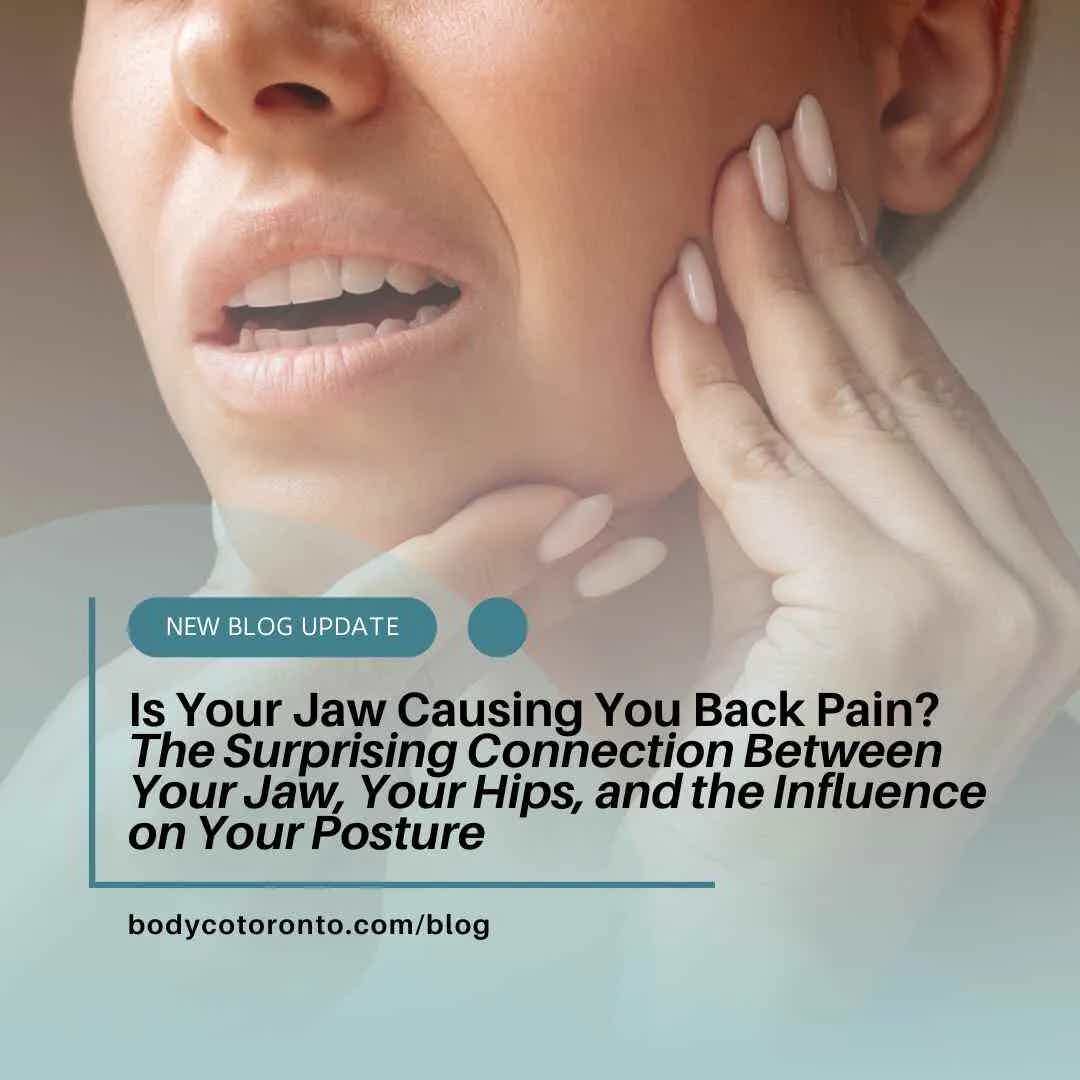
When we think of back pain, we often blame poor posture, tight muscles, or long hours spent sitting. However, we rarely consider what our jaw is doing and how it may contribute. The temporomandibular joint (TMJ) is the hinge that connects your jaw to your skull and it plays a much bigger role in posture, balance, and movement than most people realize. If your jaw is tense or restricted, it can set off a chain reaction throughout your body, potentially leading to poor posture, tight hip flexors, dizziness, and even back pain.
How Is Your Jaw and Posture Connected
Your jaw might seem like a small, isolated part of the body, but it is deeply interconnected with your spine, inner ear, and overall alignment. Here’s how:
Fascial Chains and Muscle Connections:
- Fascia is a mesh of connective tissue that encloses and links every structure in the human body. The jaw is connected to the neck, shoulders, and even the pelvis through this fascial network. When tension builds up in the jaw, it can create imbalances down the entire chain of these fascial connections, altering posture and spinal alignment.
Forward Head Posture and Pelvic Tilt:
- If your clench your jaw or grind your teeth, your head tends to shift forward - into a position known as forward head posture. This subtle change forces your neck and upper back muscles to overwork, causing strain that extends down to your lower back.
- To compensate, your pelvis may tilt forward, which increases tension in the hip flexors and disrupts spinal alignment.
Jaw Clenching and Core Engagement:
- The jaw and core muscles are neurologically interconnected. When you clench your jaw, your body reflexively engages muscles in your neck, shoulders, and even lower back. Increased tension through these muscle groups can prevent proper core activation, which can create and exacerbate instability and pain.
Vestibular System and Inner Ear Influence:
- The jaw hangs off of the temporal bones - cranial bones that house the inner ear and vestibular system, which are key players in balance and spatial orientation. Tension in the jaw can cause subtle shifts in these bones, disrupting equilibrium and triggering symptoms like unsteady posture, dizziness, and vertigo.
- A misaligned jaw can send confusing signals to the vestibular system, leading to compensatory postural changes as the body attempts to maintain stability. This can manifest as uneven weight distribution, stiffness in the lower back, and further engagement of the hip flexors.
Your Jaw and Your Hip Flexors
Your hip flexors - especially the psoas muscles - play a crucial role in stabilizing your spine and pelvis. When there is tension in your jaw, the hip flexors will often compensate in response, leading to:
- Tightness and Reduced Mobility: Forward head posture shifts weight distribution, making the hip flexors work harder to stabilize the body, causing them to become tight and overactive.
- Lower Back Strain: A forward-tilted pelvis from tight hip flexors can increase arching through the lower back, leading to pain and discomfort.
- Imbalanced Movement Patterns: With misaligned posture and tight hip flexors, simple movements like walking or sitting can reinforce poor mechanics, further aggravating tension and pain.
How Osteopathy Can Help
Assessing Posture, the Jaw, and the Vestibular System
- Assessing the whole body, including the TMJ - evaluating how it may affect head positioning, spinal alignment, hip function, and its influence on the vestibular system and overall stability.
Cranial and Fascial Release
- Gentle techniques around the head and face in order to release tension around the jaw, cranial bones, and fascia to restore balance throughout the body and improve vestibular function.
Restoring Hip and Pelvic Mobility
- Manual therapy and stretching exercises to help relieve tension in the hip flexors and correct and maintain proper pelvic alignment.
Postural Correction, Breathing Optimization, and Vestibular Rehabilitation
- Breathing techniques, vestibular training, and postural re-education can help to retrain your body to maintain better alignment and reduce unnecessary tension.
Simple Tips To Help Right Now
- Jaw Relaxation
- Gentle jaw stretching.
- Self-massage around the cheeks, jaw joint, temples, above and behind the ears.
- Place your tongue lightly on the roof of your mouth and let your jaw rest open naturally.
- Posture Awareness
- Check in with your head position throughout the day - keep your ears aligned with your shoulders.
- Avoid slouching and use ergonomic seating if working at a desk.
- Breathing and Stress Management
- Practice diaphragmatic (belly) breathing to relax the nervous system and reduce jaw tension
- Incorporate mindfulness techniques to decrease stress-related jaw clenching.
Final Thoughts
Your jaw is a hidden influencer on movement and stability throughout your whole body, and addressing its dysfunction can be a missing piece in resolving pain. A holistic approach integrates these influences into targeted treatments that aim to restore structural and functional harmony. Simple interventions can make profound differences in daily comfort. If you have been struggling with lingering issues related to posture, balance, tensions, or pain consider seeking professional osteopathic care.